

Protein Shampoo for Thinning Hair: Why It Works
Feb 16, 2026
By Pureance
 11 min read
 6 citations
Protein shampoo for thinning hair works by depositing hydrolyzed proteins directly into weakened hair shafts, rebuilding the structural foundation that diminishes with age, styling, and chemical treatments. Unlike volumizing products that temporarily coat hair strands, a quality shampoo with protein addresses the root cause: the loss of keratin that makes up 80-85% of your hair’s structure.
You’ve tried the volumizing mousses, the thickening sprays, the expensive salon treatments. Your hair still looks thin in every photo. The reason most products fail is simple: they treat the symptom without addressing what’s actually happening inside each strand.
Here’s what you may not have tried: protein-based care that helps reinforce strands that have weakened over time due to styling and environmental exposure. This article explains how protein shampoo differs from everything else you’ve used, why certain formulas work while others don’t, and what you can realistically expect when you address the real problem instead of just masking it
Key Article Findings
- Hair thins with age primarily because it loses protein, not just volume. Most volumizing products address the symptom without addressing the cause.
- Protein shampoo works by depositing hydrolyzed proteins that bind to weakened areas of the hair shaft, reinforcing structure and creating real, lasting thickness.
- Not all protein shampoos are created equal. The best formulas combine effective protein therapy with gentle, sulfate-free cleansing that won’t undo the benefits.
- Hair care professionals commonly recommend protein-based treatments for age-related thinning and structural weakness, yet most people have never tried them.
- Results typically appear within 3-6 weeks of consistent use, with meaningful improvements by 8-12 weeks.
You Know That Moment in the Photo
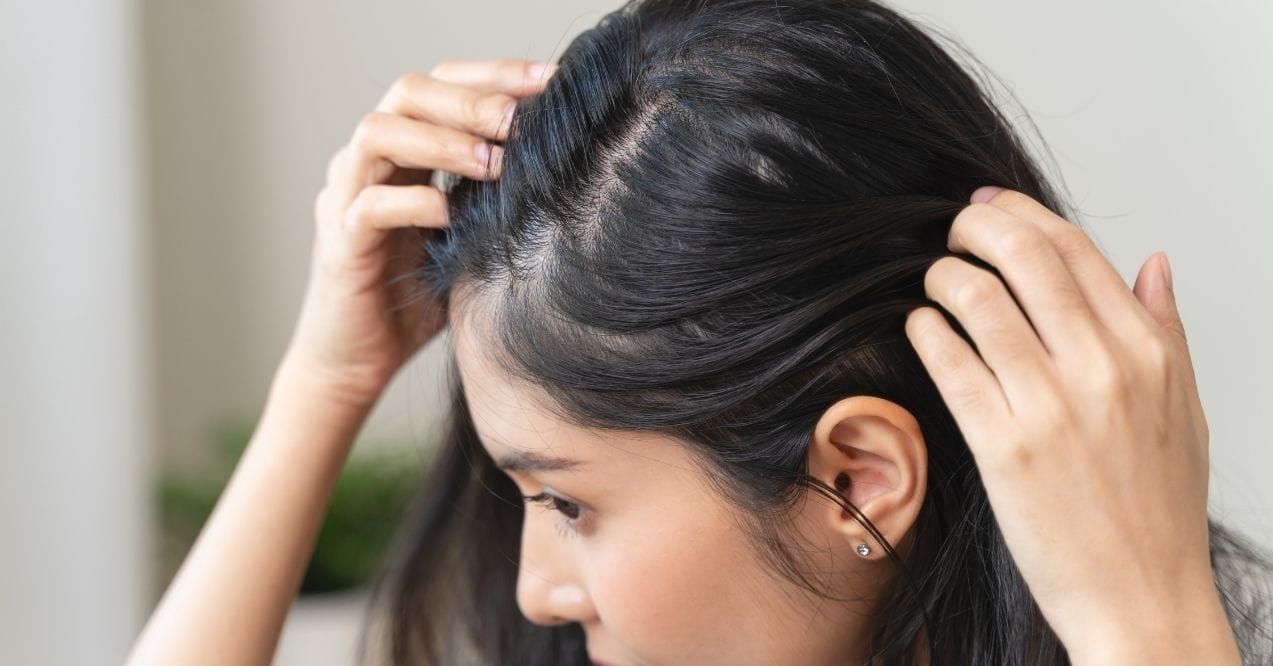
You’re scrolling through vacation pictures, holiday gatherings, or even just a casual selfie. And there it is. Your scalp. Visible through your hair. The parting looks wider than you remembered. The light hits the top of your head and suddenly your hair looks half as thick as it did five years ago.
It’s not just photos. It’s the hair in the shower drain. The ponytail that keeps getting thinner. The way your hairstylist quietly starts suggesting “layers” and “texture” instead of the styles you actually want.
The frustration isn’t just about hair. It’s about feeling like yourself. It’s about walking past a mirror without doing a double-take. It’s about not dreading the group photo.
So what if the reason nothing has worked isn’t that you haven’t found the right product? It’s that you’ve been treating the wrong problem entirely.
Why Hair Actually Thins After 40 (It’s Not What Most Products Address)
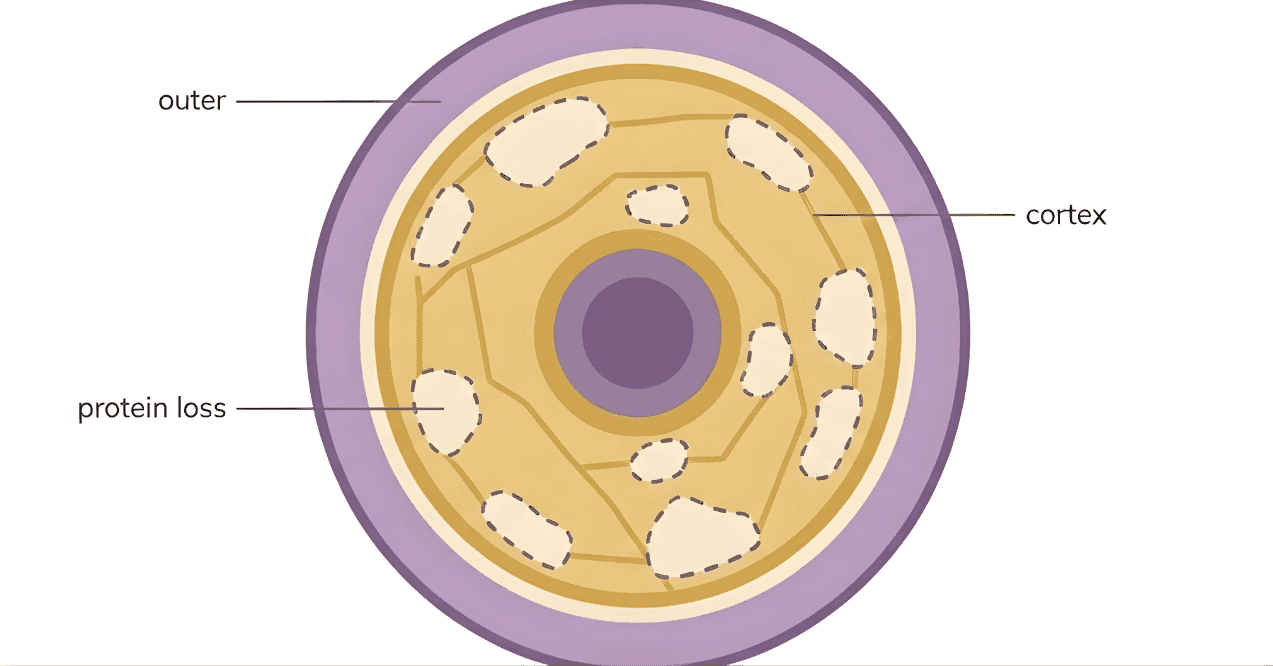
Hair loses volume because individual strands shed their internal protein structure over time, making each hair thinner and weaker regardless of how many follicles remain active. Your hair contains approximately 80-85% protein, primarily keratin. Every wash, heat styling session, color treatment, and sun exposure strips away small amounts of this structural protein.
Most volumizing shampoo for fine hair works by temporarily inflating or coating the hair shaft to create the illusion of thickness. These products deposit polymers, silicones, or waxes that make hair feel thicker for a few hours, until the next wash strips it all away.
But here’s what dermatologists and trichologists have known for years: the real reason hair thins with age is protein loss. Every time you wash, style, color, or even just expose your hair to sunlight, you lose small amounts of this protein. When you’re younger, your body replaces it efficiently. But as you age, the replacement process slows down, and the cumulative loss starts to show.
The result? Each individual strand becomes thinner, weaker, and more prone to breakage. It’s not necessarily that you have fewer hairs (though that can happen too). It’s that the hairs you have have lost their internal structure.This is why volumizing products feel like a losing battle. You’re trying to add volume to strands that have literally lost their structural foundation. It’s like inflating a balloon that has a hole in it. You need to repair the hole first.
How Protein Shampoo Actually Works (And Why Trichologists Recommend It)
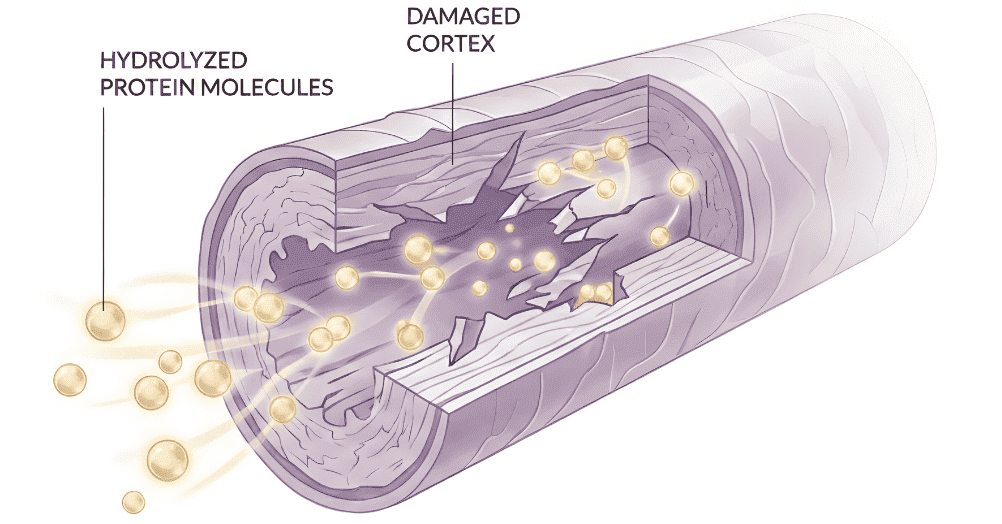
A protein shampoo for thinning hair works fundamentally differently from a volumizing shampoo. Instead of coating the outside of the hair, it deposits hydrolyzed wheat protein molecules that are small enough to penetrate into the hair shaft itself.
Once inside, these protein molecules bind to the weakened areas where your natural keratin has been lost, creating what scientists describe as a “molecular scaffold.” Essentially, they fill in the gaps in your hair’s internal structure.
Studies on wheat protein formulations have demonstrated their effectiveness in restoring hair damaged by styling and environmental factors, making them particularly valuable for age-related thinning where cumulative damage is the primary concern.
The effect isn’t cosmetic camouflage. It’s structural reinforcement. Each wash may deposit more protein, and over time, the cumulative effect is hair that genuinely is thicker, stronger, and more resilient. Not hair that just looks that way until you wash it again.
Hair’s structural integrity depends on keratin proteins embedded in the cortex — and when those proteins are depleted, the strand loses both diameter and tensile strength. Research confirms this is a reversible process: application of recombinant keratin K31 to damaged hair increased strand diameter by up to 49% and nearly doubled mechanical strength in a single treatment, demonstrating genuine structural repair rather than a cosmetic workaround.
Leading trichologists have noted that products containing thickening proteins rank among their top recommendations for fine and thinning hair, specifically because they address the structural deficit rather than simply masking it.
While further research specific to age-related thinning is ongoing, these findings point to a consistent underlying mechanism. This is why protein therapy is gaining attention as a leading approach for age-related hair thinning: it works with your hair’s natural biology rather than against it.
Not All Protein Shampoos Are Created Equal
The growing awareness of protein therapy has led to a flood of products claiming to offer it. But there are significant differences in formulation quality that determine whether a protein based shampoo actually delivers on its promise.
The Protein Source Matters
The most effective protein rich shampoo formulas use hydrolyzed proteins, proteins that have been broken down into molecules small enough to actually penetrate the hair shaft. Whole proteins sit on the surface. Hydrolyzed proteins get inside.
The best formulations use proteins with a molecular structure similar to your hair’s natural keratin, like hydrolyzed wheat protein hair treatments. Because wheat protein shares nearly the same structure as human hair keratin, it integrates rather than just coating, allowing these peptides to bind directly to weakened areas.
A quality wheat protein shampoo delivers these small molecules during every wash, building structural integrity over weeks and months. Each application adds another layer of reinforcement to previously weakened areas.
What’s NOT in the Formula Matters Just as Much
Here’s the irony: many shampoos that add protein also contain ingredients that strip it right back out. Harsh sulfates, in particular, are extremely effective at removing protein from the hair shaft. So a protein shampoo for fine hair with sulfates is essentially building and demolishing at the same time.
The best shampoo wheat protein formulas are sulfate-free, so they don’t strip the protein they’re depositing. They’re also silicone-free, so they don’t coat the shaft and block protein absorption. And they’re paraben-free to support scalp health, which is the foundation of hair health.
Quality Indicators for Protein Shampoo
| Feature | Why It Matters |
| Hydrolyzed proteins | Small enough to penetrate hair shaft |
| Sulfate-free | Won’t strip deposited proteins |
| Silicone-free | Allows protein absorption |
| Third-party certified | Verifies ingredient claims |
| pH-balanced | Seals cuticle to lock in proteins |
Certification Provides Accountability
In a market full of “clean” claims, third-party certifications are the only reliable way to verify that a product is actually what it says it is. Look for certifications like Ecocert COSMOS, which verifies organic ingredient sourcing and sustainable manufacturing. A product with this certification has been independently audited. Its claims aren’t just marketing.
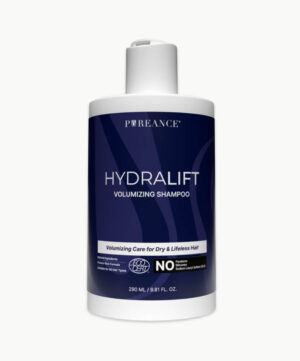
How Pureance HydraLift Approaches Protein Therapy Differently
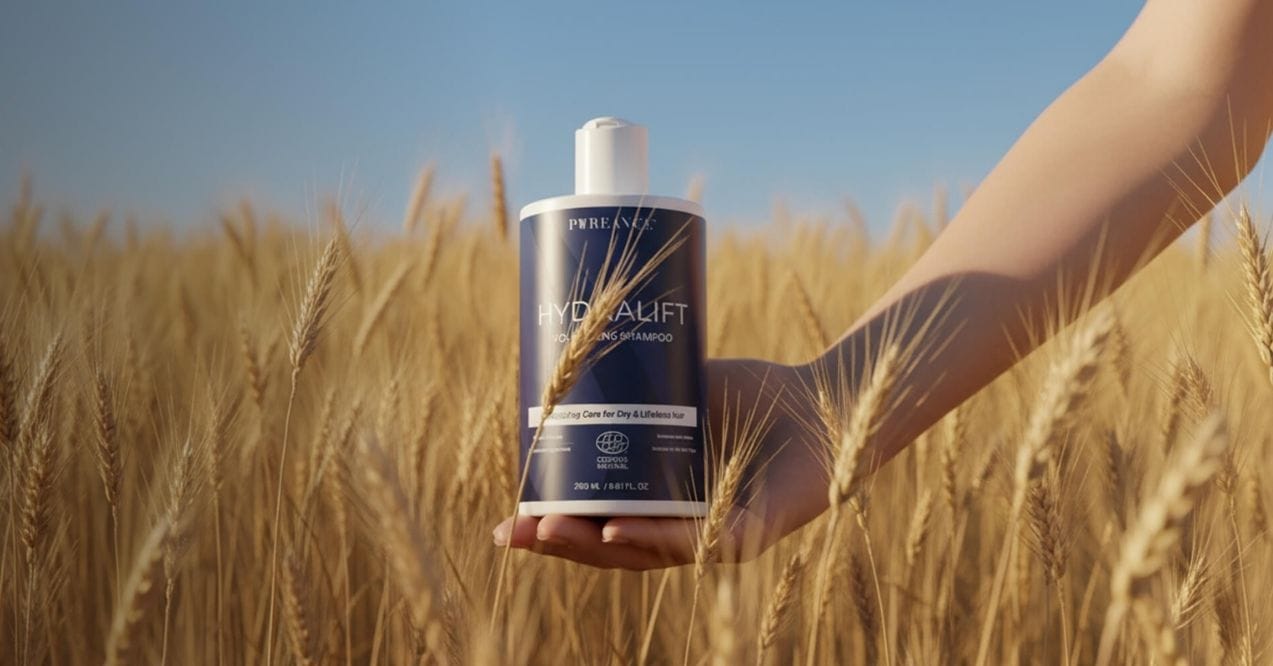
Pureance’s HydraLift Volumizing Shampoo was specifically formulated to address what most volumizing products miss: the protein deficit at the core of age-related thinning. This is a protein shampoo for thinning hair that rebuilds the structural foundation while keeping things gentle enough for daily life.
The formula is built around hydrolyzed wheat protein, which adheres to the hair shaft and helps support weakened areas, improving the look and feel of stronger, fuller strands over time. Because it shares nearly the same structure as your natural hair proteins, it integrates with each strand rather than just sitting on the surface.
But what makes HydraLift different from other protein shampoos on the market is what surrounds that core ingredient:
- Glycerin and plant-based amino acids lock in moisture and reduce dryness, preventing the brittleness that protein-only formulas can sometimes cause.
- Cocamidopropyl betaine (coconut-derived) provides cleansing that’s gentle enough for daily use while conditioning as it cleans.
- Aloe vera and botanical extracts help hydrate and soothe the scalp, supporting overall scalp comfort and balance.
- Citric acid balances pH to seal the cuticle for enhanced shine.
- Xylitol (birch-derived) provides lightweight hydration without residue.
The entire formula is Ecocert COSMOS Certified, vegan, gluten-free, and free from sulfates, parabens, and silicones. It’s designed for all hair types, including color-treated and chemically processed hair, and is suitable for both men and women.
For best results, Pureance recommends using HydraLift 2-3 times per week, leaving the lather on for 1-2 minutes to allow the protein complex to penetrate, and pairing with the HydraSilk Moisturizing Conditioner for optimal protein-moisture balance.
Of course, shampoo is just one part of the equation. If you want to see the best results, pairing protein therapy with other good habits makes a real difference. Check out our guide on getting healthier hair for a fuller picture.
What to Realistically Expect (And How Long It Takes)
Honesty matters more than hype. Here’s what you can realistically expect from a protein shampoo regimen:
First 1-2 weeks: You’ll likely notice your hair feels smoother, stronger, and easier to style. The protein is beginning to fill structural gaps, and the sulfate-free formula means your hair isn’t being stripped between washes.
Weeks 3-6: Visible changes start appearing. Hair may look shinier, feel thicker between your fingers, and hold styles better. Many users report that their hair appears fuller and more vibrant during this period.
Weeks 6-12: With continued use, many users report progressive improvement in the appearance of strand strength and overall fullness.
HydraLift comes with a 365-day money-back guarantee, so there’s no risk in giving it the time it needs to work. Protein restoration is a gradual process. Your hair didn’t lose its strength overnight, and it won’t rebuild overnight either. But the trajectory is real, and the results compound with consistent use.
The Change That Actually Matters
Protein shampoo for thinning hair isn’t just about thicker strands or fuller volume. It’s about what happens when your hair starts cooperating again.
It’s catching your reflection in a store window and not immediately looking away. It’s running your fingers through your hair and feeling actual substance. It’s getting a compliment from someone who doesn’t know you changed anything. They just think you look good.
It’s not vanity. It’s identity. Your hair is part of how you see yourself, and when it starts slipping away, it takes a piece of your confidence with it. Getting that back, even partially, changes how you carry yourself in every room you walk into.
Protein shampoo isn’t magic. It’s science applied to a real problem in a way that actually addresses the root cause. And for the millions of people who’ve tried everything else without lasting results, it may be the one approach they haven’t considered yet. The difference is in rebuilding rather than masking, in structural repair rather than temporary fixes, and in results that compound with consistency rather than disappearing between washes.
Protein shampoo contains hydrolyzed proteins—small protein fragments that can temporarily bind to and reinforce weakened areas of the hair strand. This helps hair feel stronger, look smoother, and appear fuller by improving strand structure and reducing breakage that can make hair look thinner.
Volumizing shampoos usually rely on lightweight conditioners, polymers, or silicones to coat the hair and boost lift for a short-term “thicker” look. Protein shampoos focus more on strengthening and supporting the hair fiber itself, so the benefits can build with consistent use. Many routines pair both: protein for support, volumizing for immediate lift.
Yes—processed hair often loses protein and can feel weaker or more fragile. A protein shampoo can help improve the feel and resilience of those strands. Look for “color-safe” and “sulfate-free,” and always follow with a moisturizing conditioner to keep hair flexible and soft.
For most people, 2–3 times per week works well. Using it every wash can be too much for some hair types and may make hair feel stiff. If that happens, reduce frequency and alternate with a hydrating shampoo and conditioner.
You may notice smoother, less frizzy, stronger-feeling hair within a few washes. A more noticeable improvement in the look of thickness and volume often takes about 3–6 weeks with regular use, since hair condition changes gradually with consistent care.
Often yes, especially if it’s free from harsh sulfates and heavy fragrance. If your scalp is easily irritated, choose gentle formulas with calming ingredients (like aloe) and patch test first. If you have a known wheat allergy, check for hydrolyzed wheat protein and consider asking a dermatologist before using it.
This site offers health, wellness, fitness and nutritional information and is designed for educational purposes only. You should not rely on this information as a substitute for, nor does it replace, professional medical advice, diagnosis, or treatment. If you have any concerns or questions about your health, you should always consult with a physician or other health-care professional. Do not disregard, avoid or delay obtaining medical or health related advice from your health-care professional because of something you may have read on this site. The use of any information provided on this site is solely at your own risk.
Nothing stated or posted on this site or available through any services are intended to be, and must not be taken to be, the practice of medical or counseling care. For purposes of this agreement, the practice of medicine and counseling includes, without limitation, psychiatry, psychology, psychotherapy, or providing health care treatment, instructions, diagnosis, prognosis or advice.
Share this article:


Related Articles